How We Hold on to Water in the Colorado River Basin
The Colorado River Basin is facing one of the driest summers on record. Snow that came too little, too late—or not at all—has depleted water supplies heading into the dry season. Throughout the West, communities are grappling with water shortages, wildfire risk and the growing impacts of a hotter, drier climate.
In a summer like this, the work doesn’t change—but the urgency does. Many of the solutions are already in motion, shaped by years of collaboration across the basin.
Across the Western U.S., TNC staff and partners are stepping up efforts to protect our forests, conserve water and help balance water needs for the communities, businesses and wildlife that need it most.
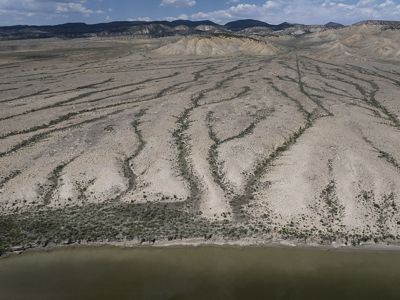
Dry landscape The Yampa River, the last major free-flowing tributary in the Colorado River system, flows near Elk Springs, Colorado. © Rory Doyle
“I think what gives me hope is that we already have the technical solutions,” says Nancy Smith, conservation director for TNC’s Colorado River program. “Now it's really about doing what people already know how to do well, which is sit down, listen to each other, figure out how these technical solutions can be applied in specific ways and specific places that work for individual communities.”
Throughout the Colorado River Basin, these solutions are already being put into practice, as communities take action to protect and restore the natural systems that help water go further. Examples like these provide a path forward in a hotter, drier future.
Restoring Forests to Protect Water
In the Western U.S., healthy forests are critical to our water supply. Along Colorado’s Front Range, forests that were once open and airy have grown dense following decades of fire suppression, leaving communities, water supplies and wildlife at greater risk from severe wildfire. TNC is working with partners to restore these fire-adapted landscapes by thinning trees and returning beneficial fire, helping forests regain their natural structure and resilience in a changing climate.
Learn more about our Western Dry Forest Program
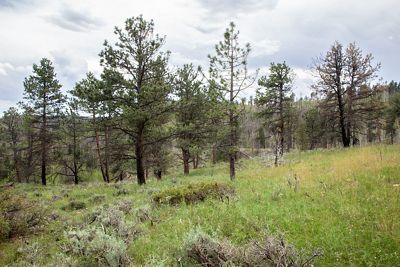
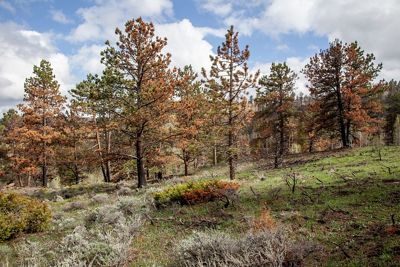
Restored forests recover after wildfire Ponderosa pine forest in Roosevelt National Forest, Colorado, half a year after burning in the Cameron Peak Fire. The forest was thinned before burning. The before photo was taken in May 2021, and the after photo was taken in July 2023.
This work is scaled up by the Northern Colorado Fireshed Collaborative, where TNC has joined agencies, researchers, communities and other nonprofits to coordinate across boundaries to reduce wildfire risk and protect watersheds. While this landscape sits outside the Colorado River Basin, restoring forest health here plays a critical role in safeguarding local water supplies and reducing the need to divert water from the Colorado River.
“Water is an anchor that helps us prioritize where we work,” says Rob Addington, director of forest and fire programs for TNC Colorado. “Reservoirs and river systems on the Front Range are critical, and we’ve seen how high severity wildfire can threaten them. After a fire, soil erosion can send ash, debris and sediment into our water. And so we’re trying to change that outcome through forest management.”
Dry years like this one add urgency, increasing pressure to restore more acres, faster. At the same time, warmer conditions can narrow the window for safely using prescribed fire, requiring crews to be more flexible in how and where they work.
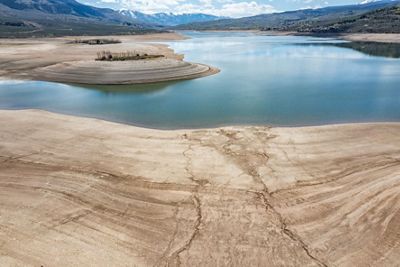
Green Mountain Reservoir The Green Mountain Reservoir in Heeney, north of Silverthorn, CO, exhibited low water levels in 2021. © Jason Houston
Addington says teams are planning with future conditions in mind and adapting their approach—for example, shifting work to higher elevations where conditions may be cooler, wetter and safer for prescribed fire.
“A year like this really highlights the importance of doubling down on this work,” he says. “We have to be ready to take advantage of restoration opportunities when they come, and we have to be smart about how to apply the climate adaptation science.”
Slowing Water to Make it Last
Another approach to preparing for a dry season is stream restoration. In the West, many streams and rivers have been straightened and simplified. Water running through them doesn’t have time to soak in and instead moves quickly downstream, where it’s more likely to evaporate.
Slowing down a stream captures more water near the headwaters, in what’s often referred to as a “second snowpack,” or water stored in soil and floodplains. This conserves more water for the dry season and supports grass for grazing and habitat for wildlife along the way.